
Depo Factory – Resilience through Structural Intelligence
- Chakkrit Ruangroj
- May 13
- 2 min read

Project Overview
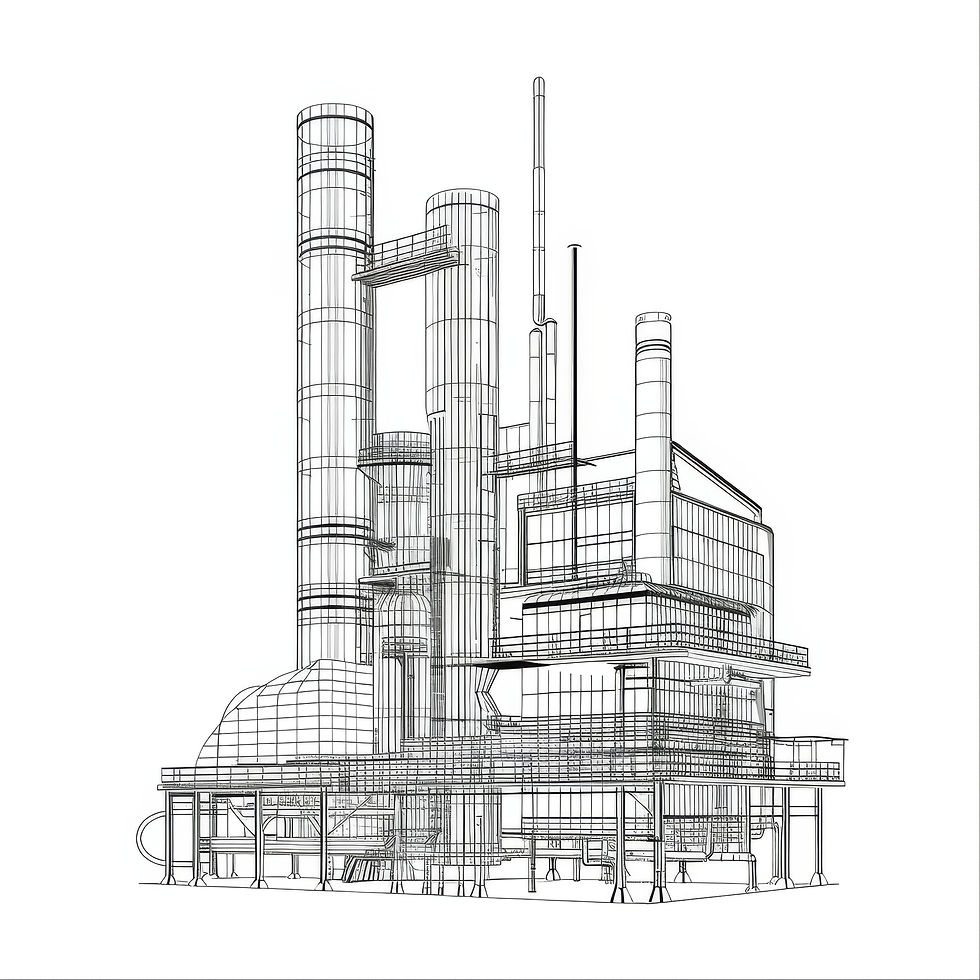
The Depo Factory, a high-capacity industrial logistics and manufacturing hub, stands as a cornerstone of modern supply chain infrastructure. Spanning over 45,000 square meters, the facility operates 24/7, housing heavy automated machinery and high-density racking systems. Given the dynamic loads and the critical natu
re of continuous operations, the owners sought a sophisticated solution to ensure long-term structural integrity and operational safety.
The Challenge: Managing Invisible Risks
As an industrial facility of this scale, Depo Factory faced several structural challenges. Constant vibrations from heavy machinery, thermal expansion in a tropical climate, and potential ground settlement posed risks that were difficult to assess through traditional manual inspections. The client required a proactive approach to detect microscopic structural shifts before they could escalate into costly repairs or hazardous failures.
The Solution: Advanced Structural Health Monitoring (SHM)
Our team implemented a comprehensive Structural Health Monitoring (SHM) system, seamlessly integrated with Digital Twin technology. The service deployment included:
Precision Sensor Network: Installation of wireless strain gauges, accelerometers, and tiltmeters at critical structural nodes (columns, long-span trusses, and foundation slabs).
Real-Time Data Acquisition: A centralized system to capture vibration frequencies and displacement data around the clock.
Automated Alert Systems: Early-warning thresholds designed to notify facility managers of any deviation from the baseline structural behavior.
The Story: From Reactive to Predictive
During the initial phase, the SHM system identified a subtle but consistent resonance pattern in the northern wing caused by a newly installed high-speed sorting line. While the vibration was within the immediate safety margin, our predictive analytics indicated that long-term fatigue could weaken the joint connections over the next five years.
Instead of waiting for visible cracks to appear, the Depo Factory management used these insights to reinforce the specific truss sections and adjust the machine's dampening system. This move shifted their maintenance philosophy from reactive (fixing what is broken) to predictive (preventing the break).
The Results: Quantifiable Excellence
The implementation of SHM services at Depo Factory delivered significant outcomes:
Zero Downtime: By identifying fatigue risks early, the facility avoided unplanned operational halts.
30% Reduction in Maintenance Costs: Focused repairs based on sensor data proved far more cost-effective than broad-spectrum manual audits.
Extended Asset Lifecycle: Structural modeling suggests a 15-year increase in the building's functional lifespan due to optimized load management.
Enhanced Safety Compliance: The project now serves as a benchmark for industrial safety, exceeding local regulatory requirements and aligning with global ISO standards.
Conclusion
The Depo Factory project demonstrates that structural safety is no longer a matter of guesswork. By integrating SHM services, we have provided the client with a "digital pulse" of their facility, ensuring that their most valuable physical asset remains resilient, efficient, and future-ready.
Comments